
Integration in the financial system
In the financial system, the word “integration” has become an umbrella term. It covers almost everything: APIs, partnerships, suppliers, automation, Banking as a Service and Open Finance.
But when everything becomes integration, we risk losing sight of what matters most.
We are not merely talking about systems communicating with one another. We are talking about different models of relationships, responsibility, governance and financial service distribution. This difference is not a technical detail. It defines who serves the customer, who assumes the risk, who governs the operation and who answers when something goes wrong.
There are at least three forms of integration commonly confused in the market: integration for automation, Banking as a Service and Open Finance.
They look similar. But they are not the same thing.
In integration for automation, the regulated institution continues serving its customer directly. The third party comes in to automate part of the journey: onboarding, validation, queries, communication, fraud prevention, interfaces or any other operational process.
In this model, the customer remains the institution’s customer. The third party helps improve operations, reduce friction and increase efficiency, but does not become the provider of the main financial service.
This relationship is usually based on a commercial agreement, security obligations, service levels and rules for using technology. Important, yes. Often strategic. But it does not necessarily create a new regulated financial service provision chain.
The key word here is efficiency. Automation improves processes. It does not, by itself, change the nature of the financial service provided.
In Banking as a Service (BaaS), a providing institution and a recipient institution operate in an integrated manner. The provider offers regulated, technological and operational infrastructure. The recipient uses this structure to deliver financial services to end customers, often within its own brand, channel or experience.
Here, integration is no longer merely automation and becomes part of the distribution model.
This is why BaaS gained so much strength. It allows companies with customer relationships to incorporate financial services into their journeys without building all the regulatory and operational infrastructure from scratch. At the same time, it allows providing institutions to scale their structure through different recipients.
But this power brings an inevitable question: who is responsible for what?
Customers may be in the recipient’s journey, using its brand and interacting with its channel. But the service may depend on the provider’s infrastructure, license, controls and operations.
“The rule is clear,” as Brazilian football referee Arnaldo Cezar Coelho would say: BaaS is not merely technological integration or a well-packaged commercial partnership. When an institution provides infrastructure for another to deliver financial services to end customers, it must be clear who does what, who controls risk, who handles customer service and which obligations fall to each participant in the chain. Ultimately, Joint Resolution No. 16 turns a discussion often sold as technology into a discussion about governance and responsibility.
That is why BaaS cannot be treated as “just an API.” The API may be the technical means, but it does not explain the arrangement’s legal, regulatory and operational nature.
BaaS is a business architecture. More than that: it is an architecture of responsibility.
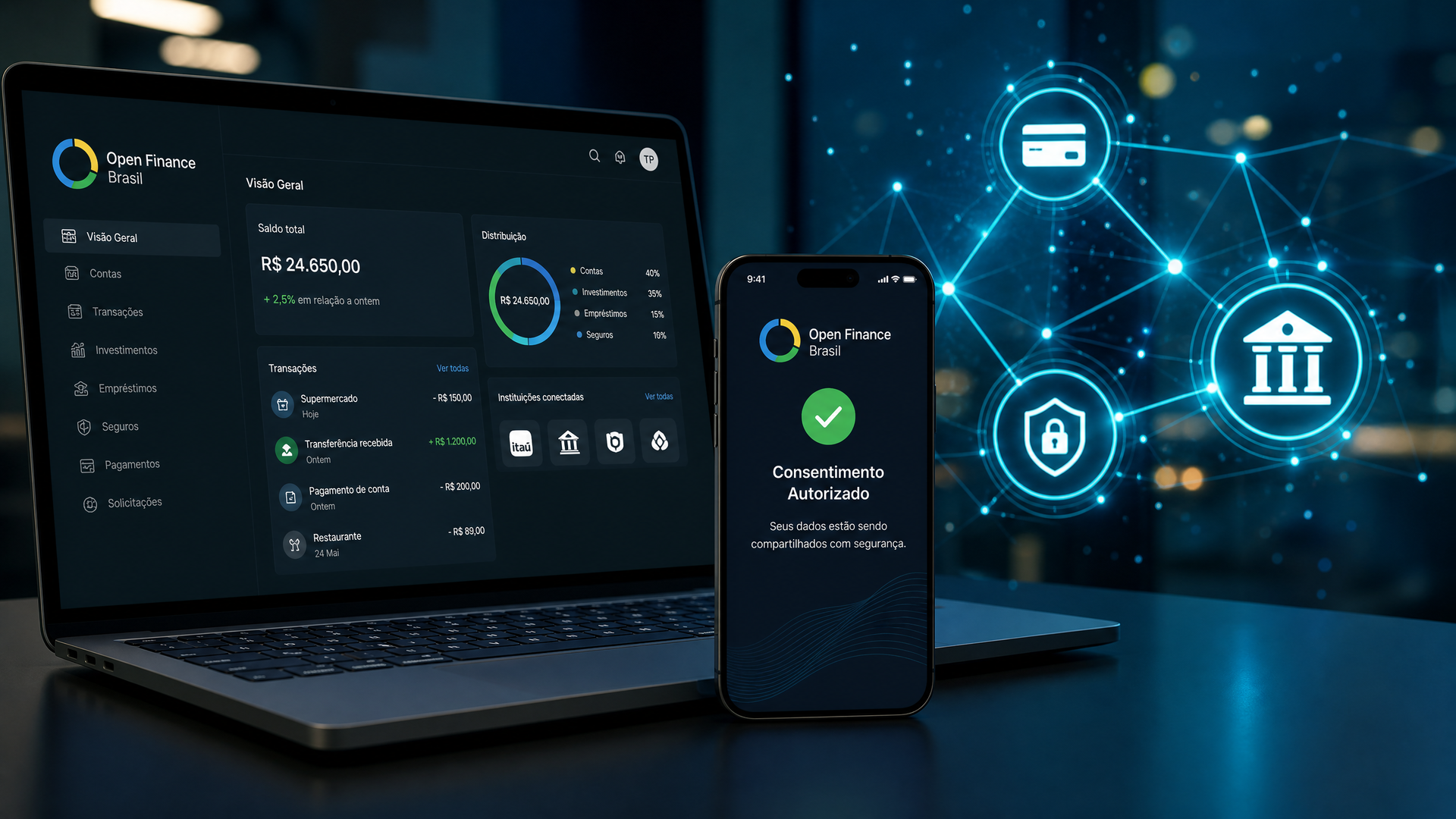
Open Finance follows a different logic. It does not arise simply from the need to automate an internal journey, or from a provider–recipient relationship for distributing financial services. Open Finance comes from a deeper idea: customers should be able to use their financial data and services in other environments securely, in a standardized way and with consent.
Here, the center of integration is not the supplier, recipient or provider. It is the customer.
In Open Finance, data and service sharing occurs between participating institutions within a common structure of governance, technical standards, operating rules and security mechanisms. It is not an arbitrary bilateral integration or a commercial agreement between two companies.
An institution does not access data because it entered a private partnership with another institution. It accesses it because the customer consented, within a regulated and standardized ecosystem.
Customer consent becomes the key authorizing the flow. Standardization reduces technical barriers. Collective governance organizes institutional participation. Security and traceability underpin the model.
Open Finance is infrastructure creating the conditions for data and services to circulate securely and interoperably, enabling better offers, better credit analysis, smarter financial management, service personalization and increased competition.
Brazil’s financial system is increasingly connected. This is good. Banks, fintechs, payment institutions, insurers, digital platforms, technology suppliers and market infrastructures are building new ways to operate together.
Automation, BaaS and Open Finance are three important forms of this transformation. They certainly are not the only ones.
What other forms of integration in the financial system would you add to this list?
📌 Originally published in Cantarino Brasileiro