
Smarter credit: new rules for private-sector payroll loans
Credit has historically been a driver of opportunity and, at the same time, something of a trap for millions of Brazilians. In Brazil, where access to credit remains concentrated, expensive and often poorly suited to people’s circumstances, any regulatory advance promoting inclusion and reducing risks deserves analysis and can be enhanced through intelligence and technology.
According to a survey by the National Confederation of Trade in Goods, Services and Tourism (CNC), 37% of Brazilians believe accessing credit has become harder. The reform of private-sector payroll lending, recently announced by the government, directly addresses this challenge. It allows private-sector workers to take out loans with repayments deducted directly from payroll and use their FGTS severance fund as additional collateral. This substantially changes the transaction’s risk logic. For borrowers, the advantage is lower interest rates. For providers, default risk is reduced. We are talking about a more predictable structure in which everyone benefits.
Although the model has existed for years in the public sector, adoption remains low among private-sector workers: only 12% currently use payroll loans, according to a survey by the meutudo platform. There is therefore enormous room for expansion, provided the access experience becomes smoother, more personalized and connected to each individual’s circumstances.
This is where Open Finance can make a difference. By allowing access to users’ financial data with consent, institutions have an opportunity to see customers beyond their credit score or gross monthly income. They can observe spending patterns, previous commitments, actual repayment capacity and even the impact a new loan may have on future behavior.
This continuous, contextualized view changes everything. It is not merely about offering credit based on collateral, but about building personalized, responsible solutions adapted to each person’s profile.
More than a technical issue, this change is structural and cultural. Credit in Brazil was built on information scarcity, leading to generalizations, high spreads and distrust. Open Finance allows us to break this pattern, making room for a new approach: more empathetic, efficient and based on real data.
Of course, challenges remain. We must ensure this is done transparently and responsibly, focusing on users’ financial well-being. Simplifying interfaces and language is also essential so people understand the benefits and feel in control of their finances. This applies both to workers seeking credit and to institutions wishing to offer more precisely targeted solutions.
Brazil has already proved it can lead transformations through technology: Pix is a clear example. Now, as Open Finance gains traction, we have an opportunity to reinvent credit. Not only as a product, but as a tool for inclusion and financial sustainability.
We therefore face an opportunity to turn credit into a truly intelligent, fair and accessible service. This requires regulation, yes, but also commitment from companies and a willingness to innovate with purpose.
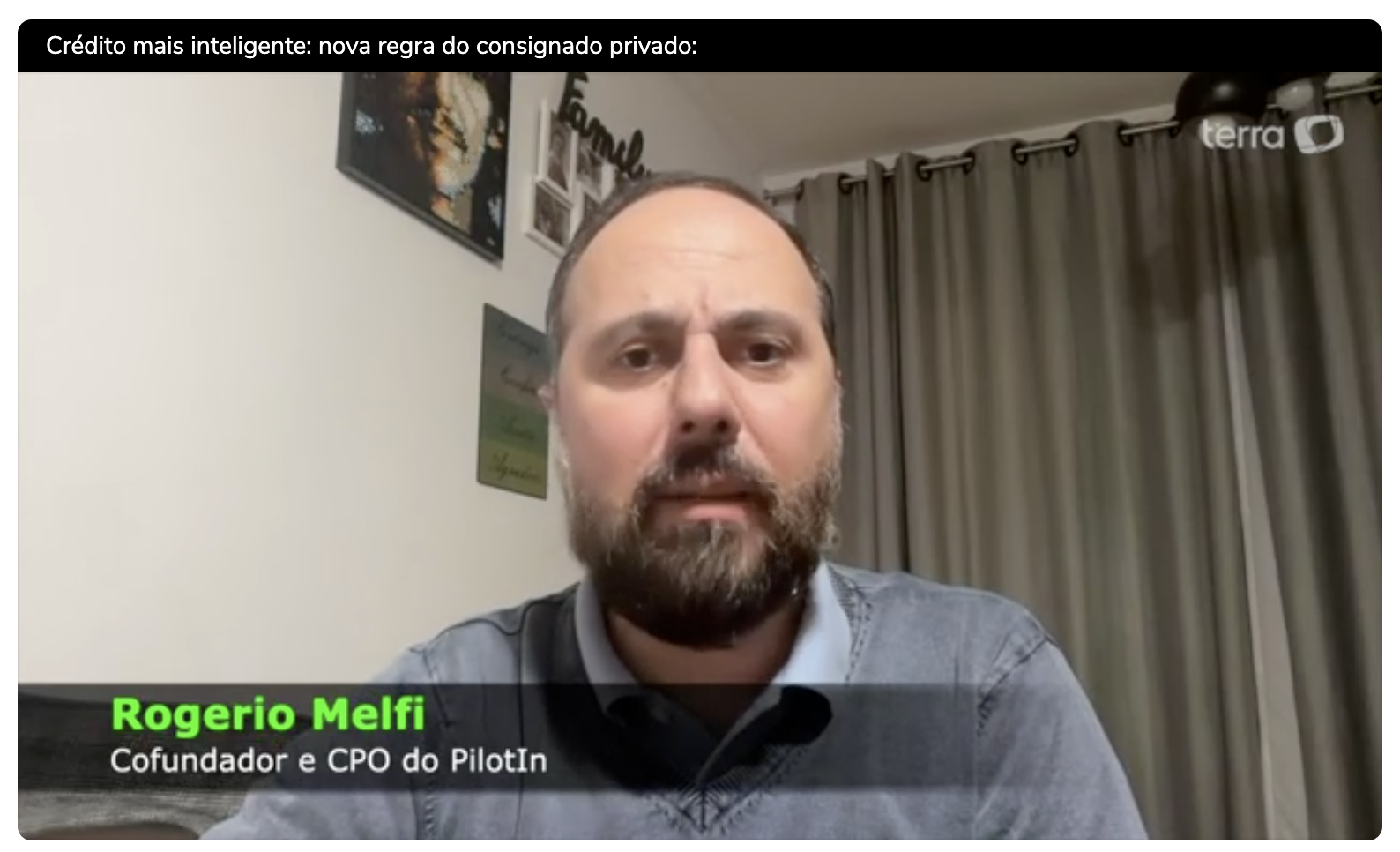
Rogerio Melfi is CPO of PilotIn, a fintech that helps Brazilians become the pilots of their financial lives.
📌 Originally published in Terra / Homework