
Does innovation no longer have a center?
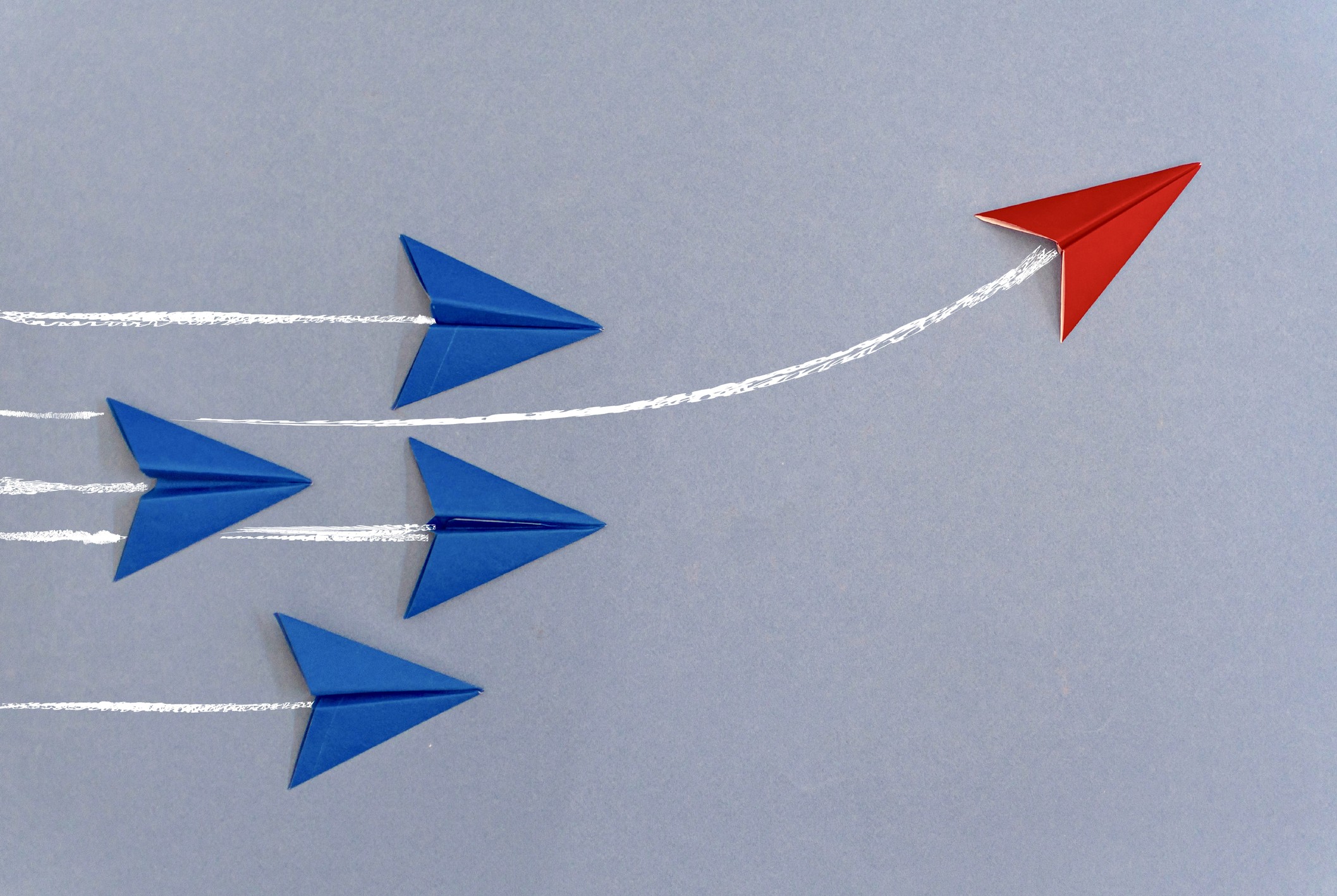
Historically, there have always been moments when different regions of the world led specific waves of innovation. Florence during the Renaissance, London during the Industrial Revolution, Silicon Valley in the software age. But the prevailing logic was concentration: a few places exerted great influence over long cycles. The rest of the world followed from afar, with some inevitable delay.
The idea that innovation is multipolar is not new. Over recent decades, we have seen predictions about the “end of major centers,” the “emergence of new hubs,” the “democratization of technology” and the “rise of the Global South.” Not all came true. Many remained promises, or at most created some interesting exceptions without changing the global backdrop. This raises a question: are we once again facing a sentiment, or is a real transformation happening this time?
What I observed at Web Summit in Lisbon reinforced this perception. Seeing Pix cited as a global benchmark at the same event where Chinese companies displayed advances in AI and robotics showed that innovation is no longer happening in a single place. It looks more like an ecosystem in constant evolution. In an ecosystem, strength lies not in a dominant species, but in distributed diversity. Multiple environments, each with its own resources, tensions and dynamics, influence one another. It is a living network capable of generating mutations, adaptations and interactions that do not depend on a single central hub.
When we analyze today’s landscape through this lens, several signs stand out. Knowledge no longer circulates linearly. Building global products no longer requires physical proximity to major centers. Capital seeks relevant problems, not addresses. Open technological infrastructures reduce asymmetries that once seemed insurmountable. Countries historically on the edge of the innovation map are now creating their own technological frontiers. Small teams can compete with corporations, and the pace of global experimentation has never been so intense.
Even so, there is an emotional component to this expectation. We have heard before that innovation would decentralize. We have heard that the “next Silicon Valley” would emerge in dozens of places, and most of those predictions did not materialize. Is it different now, or are we merely repeating a cycle of enthusiasm?
The answer may lie in the ecosystem. Structural transformations rarely happen overnight; they accumulate. Ecosystems take time to mature, but when they reach equilibrium, or creative disequilibrium, they produce unexpected leaps. What we see today is a set of conditions that did not exist before: access to knowledge, global infrastructure, distributed talent and construction costs that have fallen dramatically. Out of necessity and opportunity, innovation has begun sprouting in more places simultaneously.
Whether this means lasting multipolarity or merely a new phase still being tested, time will tell. But there is something different in the air.
And it is precisely in this space between almost, not yet and perhaps now that innovation happens.
📌 Originally published in Época Negócios